Glossary
Mosaic has its own language. When I first began leaning into this art form, I'll admit I was a bit tongue-tied, tripping over unfamiliar words. But as I began to understand them and use them daily in my work, they became a natural part of how I think about and approach each piece. Below are the terms I use most on my website, but please know that the language of mosaic goes so much deeper!
tesserae
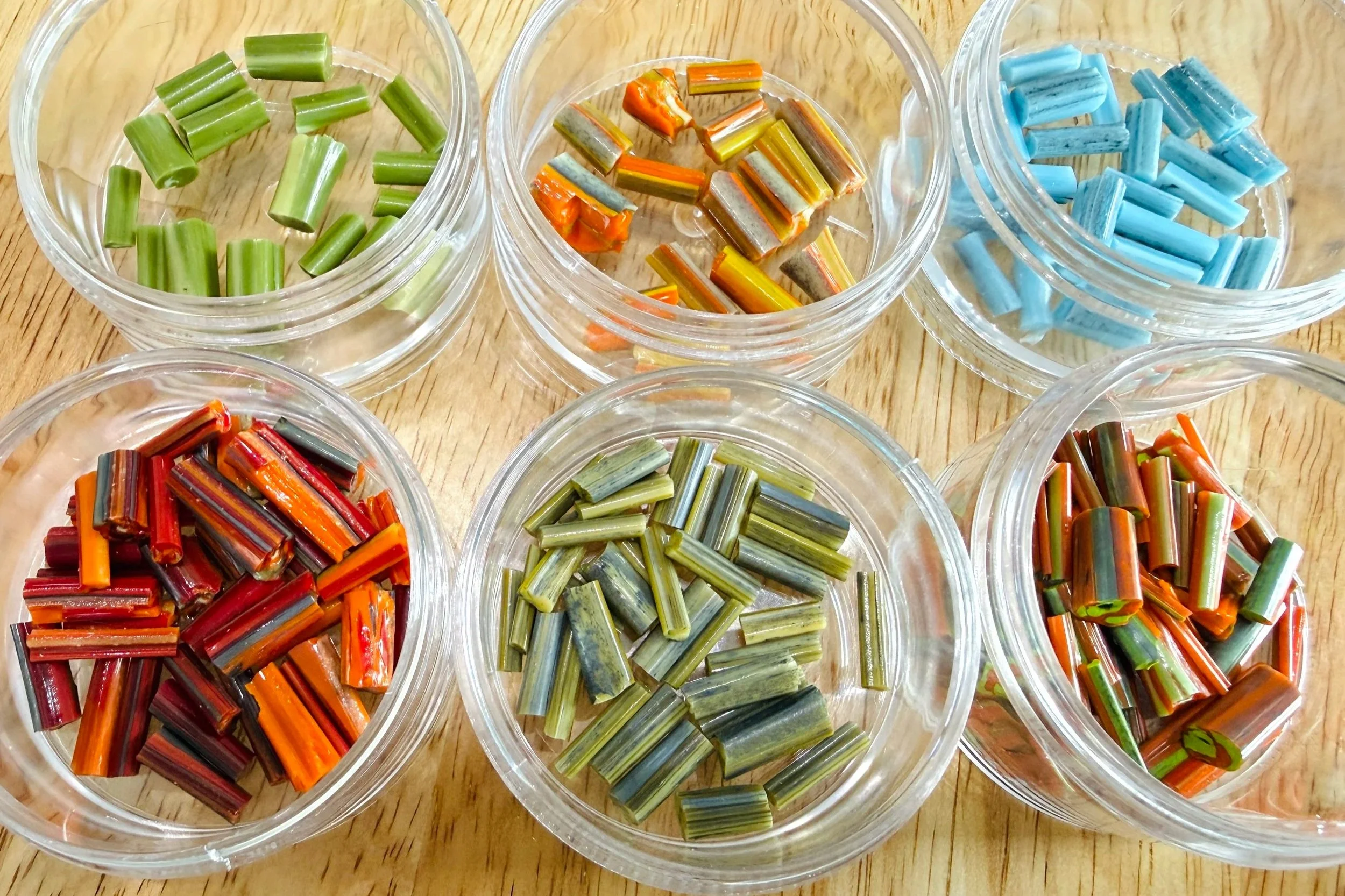
Tesserae are the individual pieces (tiles, glass, stone, or any material) that make up a mosaic. The word is plural; a single piece is a tessera. Every decision about a tessera's size, color, angle, and placement is a small act of intention that contributes to the whole composition.
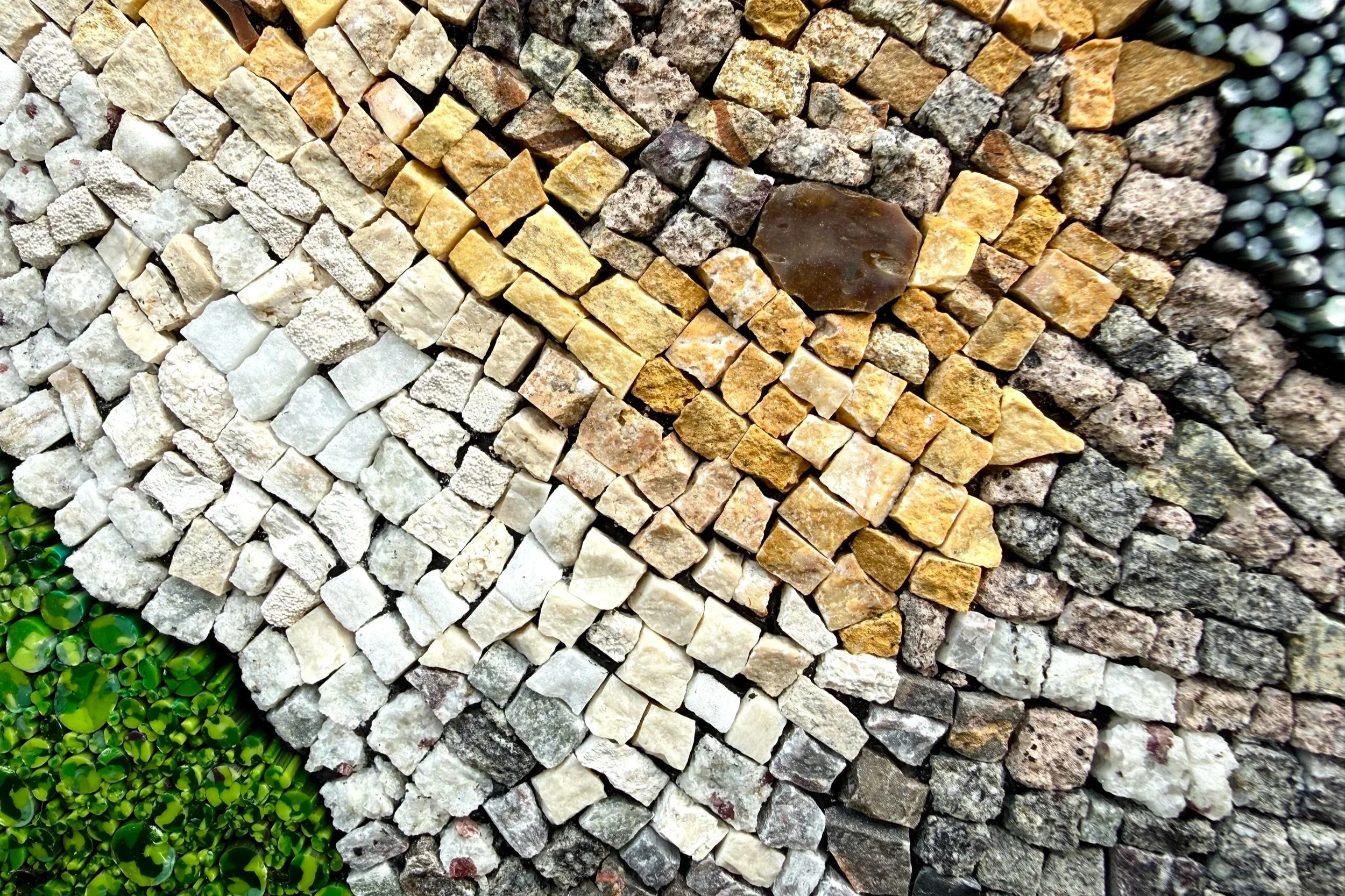
Andamento is the flow and direction of tesserae across a mosaic. Think of it as the current running beneath the surface — the way tiles are placed that guide the eye, follow contours, and give the work its rhythm and energy. There are several recognized andamento styles, each with its own character and logic. Choosing how to move tesserae across a surface is one of the most expressive decisions a mosaic artist makes.
andamento
smalti
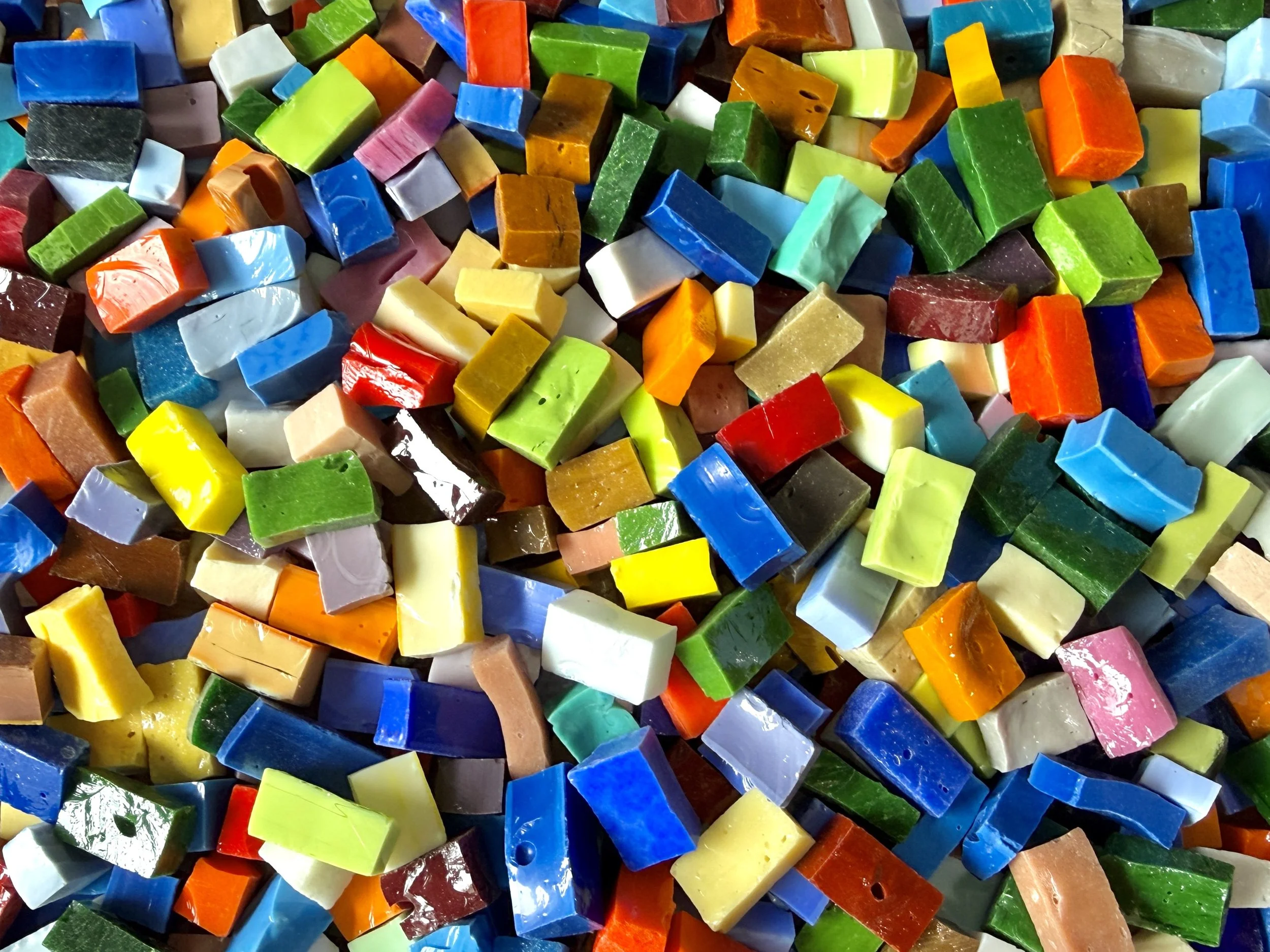
Smalti is opaque glass made specifically for mosaic, originating in Venice and Murano. Unlike regular glass, smalti is formulated to hold color richly and reflect light in a uniquely alive way. It comes in hundreds of colors and is the material at the heart of mosaic tradition.
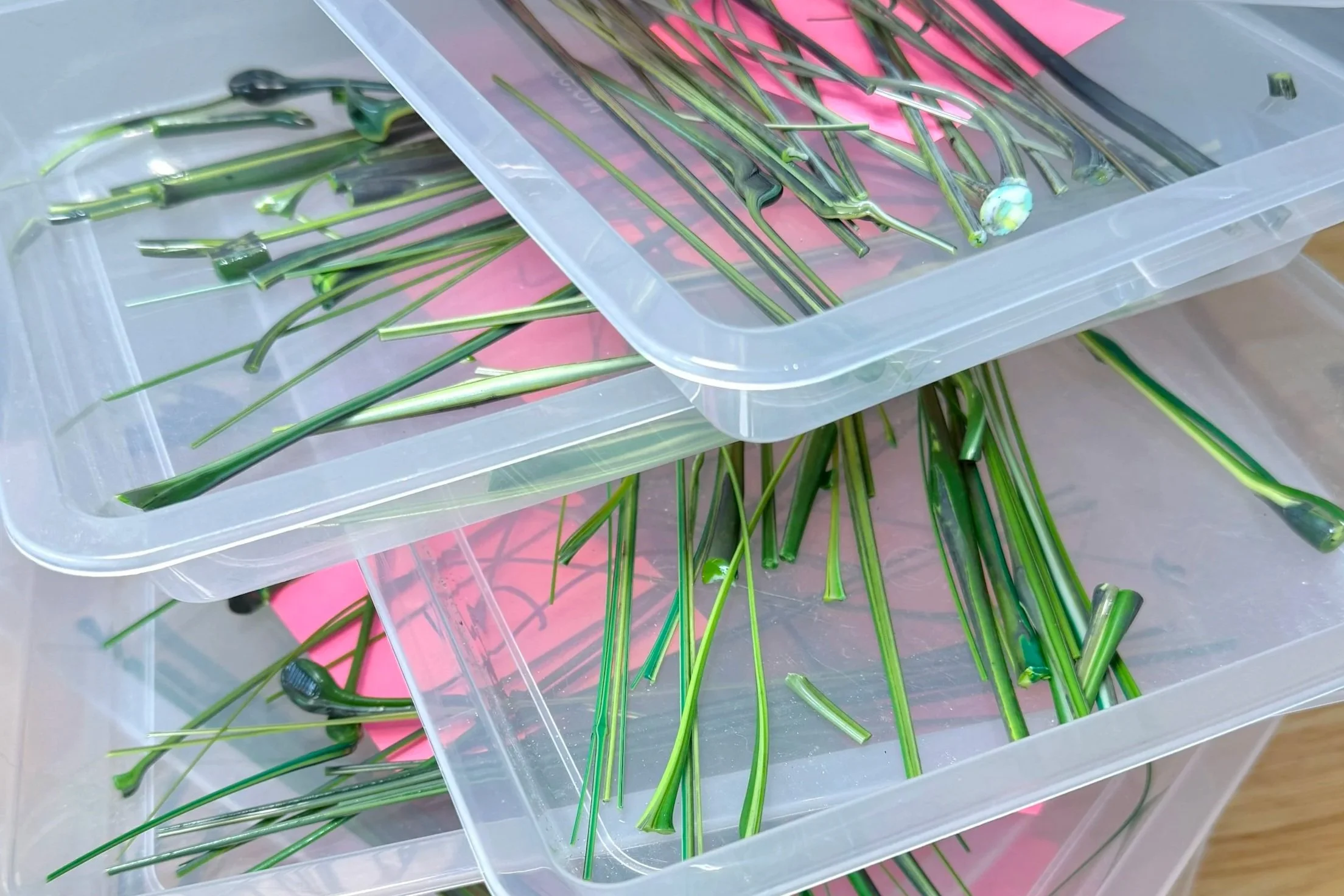
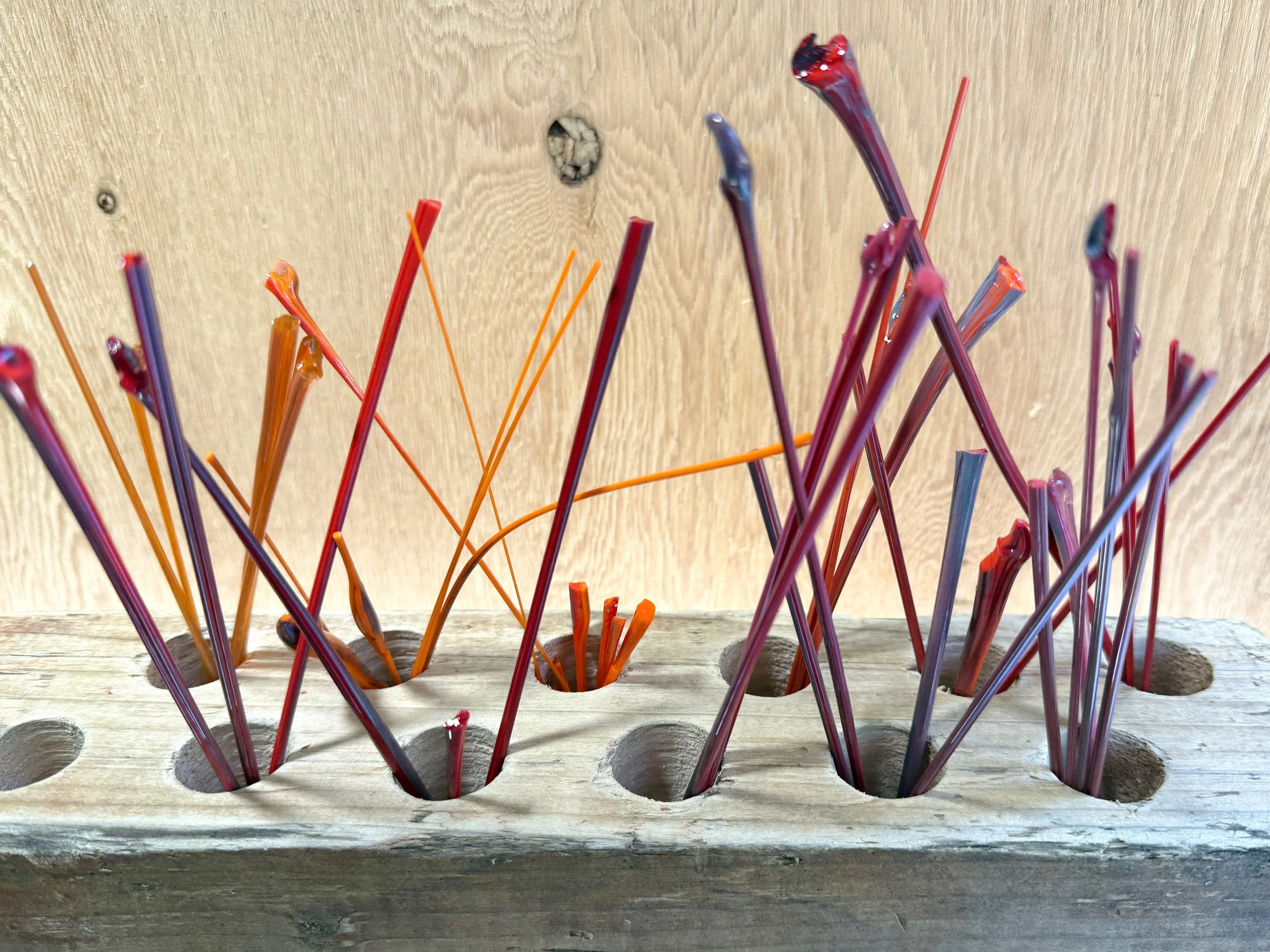
Filati are extremely fine glass threads pulled from molten smalti. They can be used whole or cut into tiny tesserae, and they bring a delicacy and luminosity to mosaic work that larger pieces simply can't achieve. I make my own filati as part of my malmischiato process, and it's one of my favorite parts of the work.
filati
malmischiato
Malmischiato is the technique of torch-blending different smalti colors and pulling them into filati threads. While filati are traditionally a single color, malmischiato threads are pulled by mixing colors together, resulting in tesserae that are richer, sharper, and more complex than anything a single color could achieve.
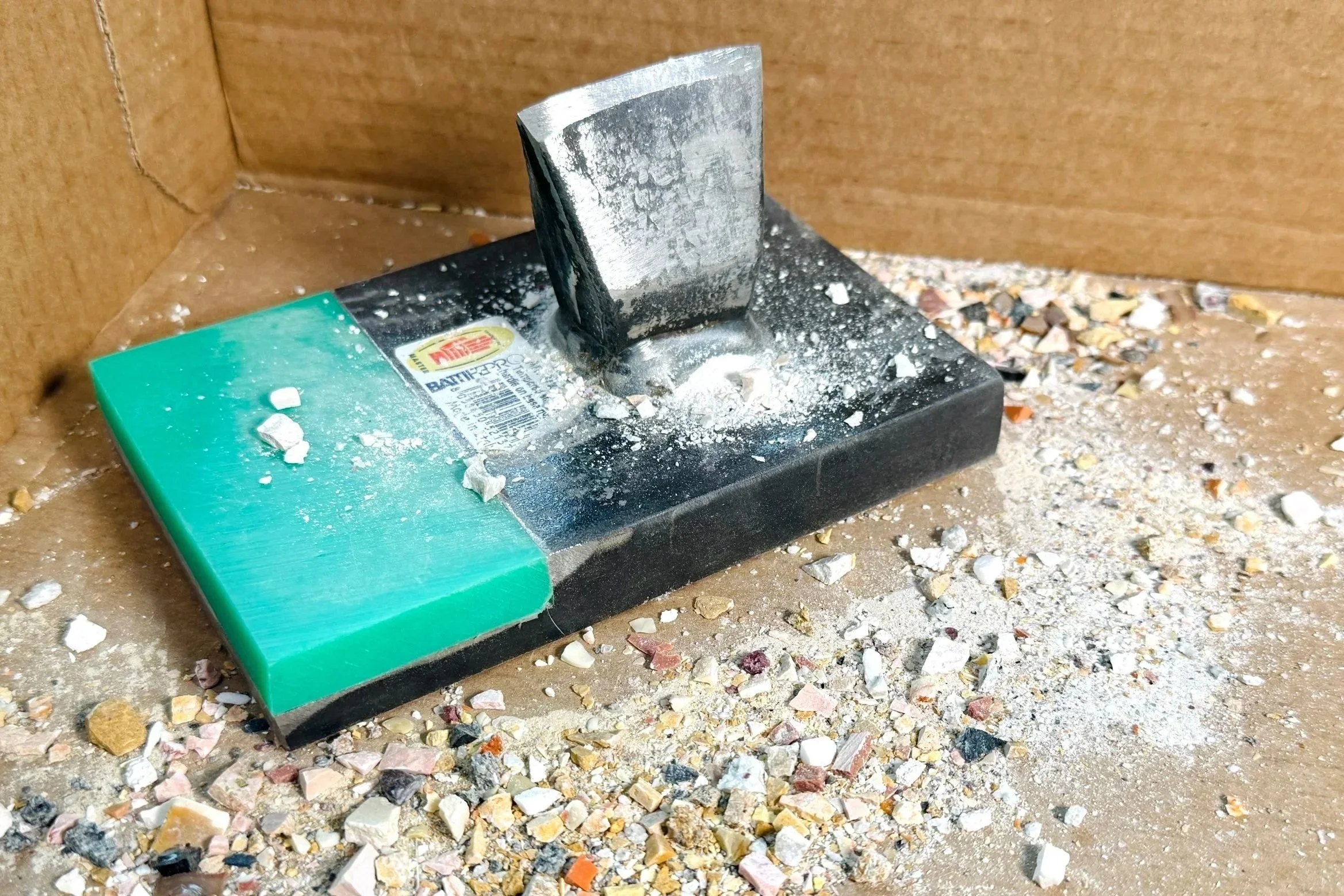
The Hardie is a hardened steel cutting tool with a sharp, chisel-like edge, set into a weighted base. It is used together with a hammer to score and split tiles and smalti with precision. The hammer and hardie are among the most traditional tools for cutting tesserae by hand.
hardie